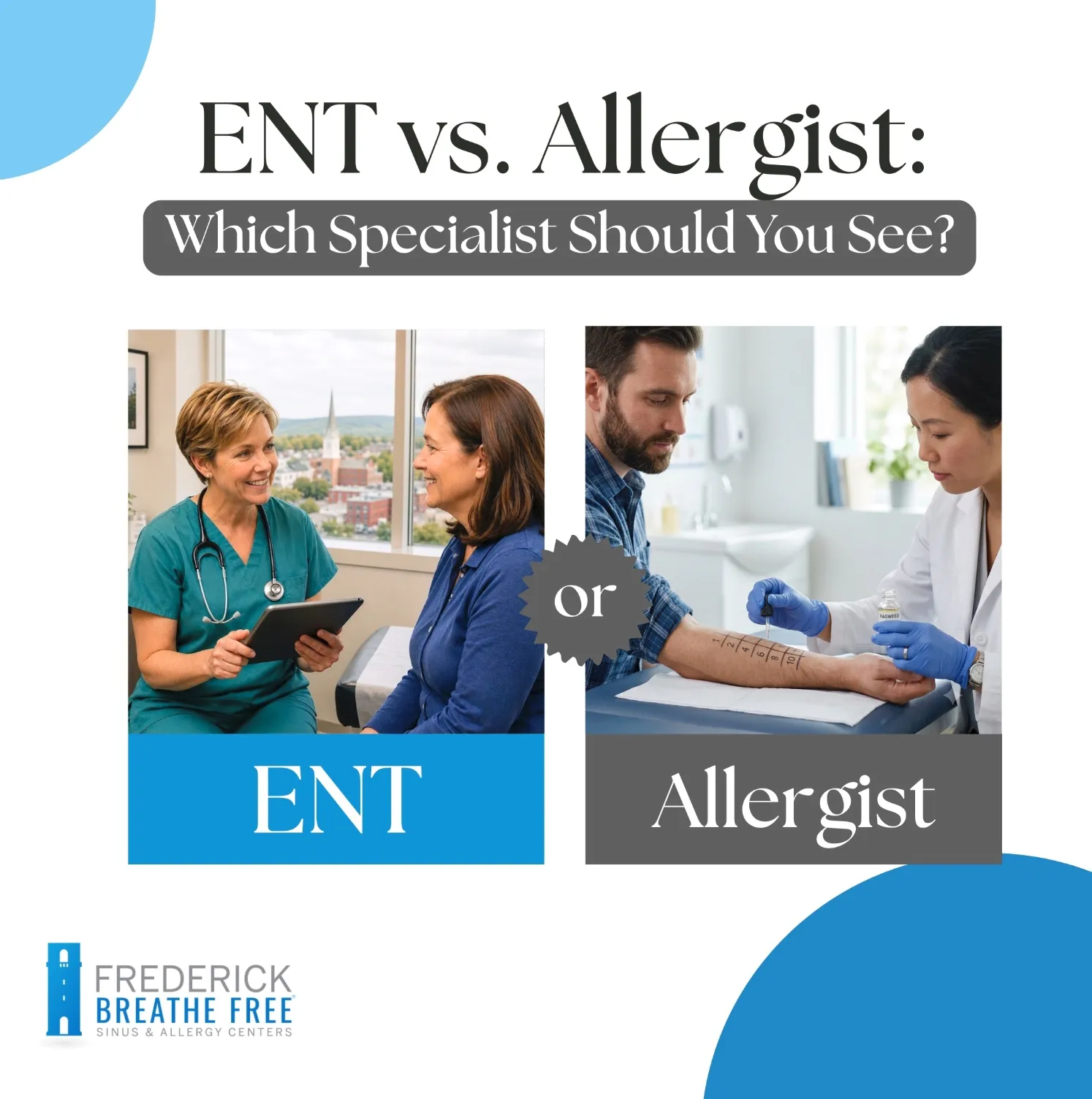
ENT vs. Allergist: Which Specialist Should You See?
Nasal congestion, sinus pressure, constant sneezing, itchy eyes, recurring sinus infections—many of these symptoms can point to allergies, but they can also signal a structural problem inside the nose or another ear, nose, and throat condition. That's why one of the most common questions patients ask is, "Should I see an ENT or an allergist?" At Frederick Breathe Free Sinus & Allergy Centers, we often meet patients who have delayed care simply because they weren't sure which type of provider was the right fit.
The answer depends less on the name of the specialist and more on what's driving your symptoms. Understanding how these two fields differ can help you make a more informed decision.
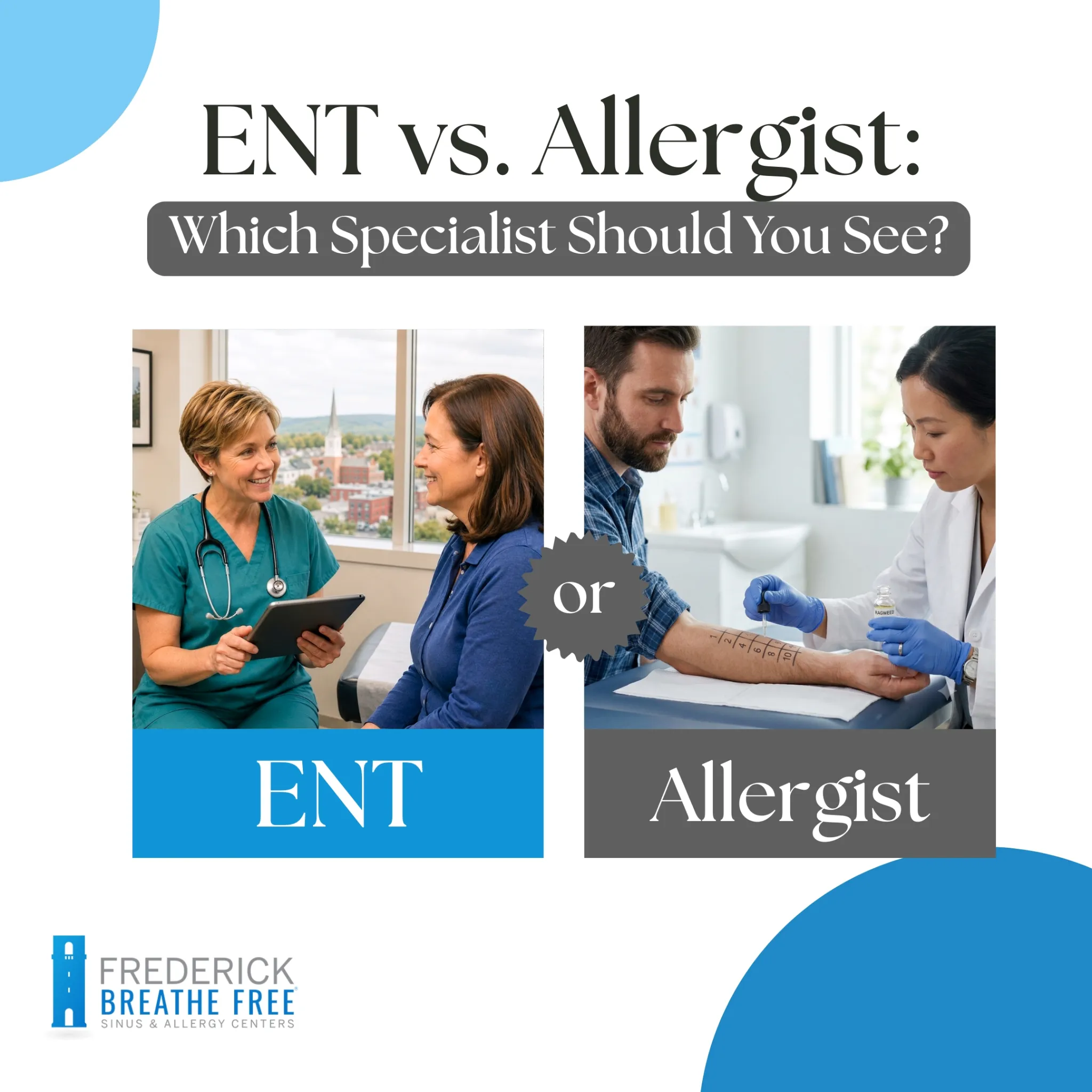
What Does an ENT Treat?
An ear, nose, and throat (ENT) physician, also known as an otolaryngologist, diagnoses and treats conditions affecting the ears, nose, sinuses, throat, head, and neck.
While many people associate ENTs with sinus infections or hearing problems, their role extends far beyond treating individual symptoms. A top ENT specialist in Frederick looks at how the structures inside the nose, sinuses, ears, and throat work together and whether an underlying condition is contributing to your discomfort.
Patients commonly visit an ENT for concerns such as:
- Chronic sinus infections
- Nasal obstruction or difficulty breathing through the nose
- Recurrent ear infections
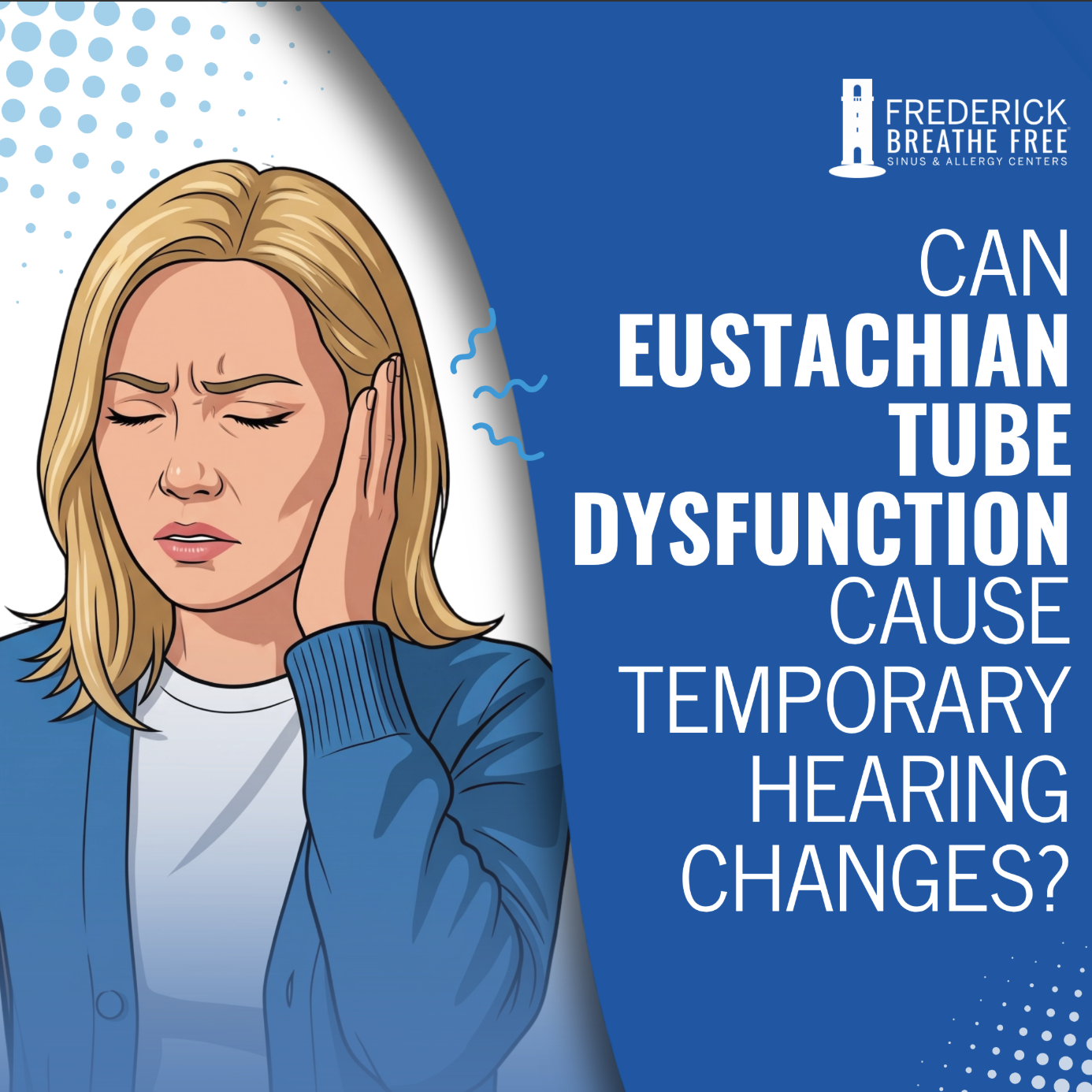
- Hearing changes
- Persistent sore throat or hoarseness
- Snoring and certain sleep-related breathing concerns
- Recurring sinus pressure or facial pain
Because structural issues and chronic inflammation often produce symptoms that resemble allergies, an ENT evaluation can help determine whether allergies are the entire problem—or only part of it.
What Does an Allergist Treat?
An allergist focuses on conditions involving the immune system's response to allergens such as pollen, mold, dust mites, pet dander, ragweed and certain foods or medications.
Patients with seasonal allergies, year-round allergic rhinitis, asthma, eczema, or other allergic conditions may benefit from allergy testing to identify the specific substances triggering their symptoms.
The goal is to understand how your immune system is responding and develop a treatment plan based on those findings.
Why the Symptoms Often Overlap
This is where many patients become confused.
Allergies cause inflammation inside the nose, but that same inflammation can affect how the sinuses function. As the nasal lining swells, the narrow drainage pathways connecting the sinuses become smaller, making it more difficult for mucus to drain normally.
Over time, persistent inflammation may contribute to:
- Chronic congestion
- Facial pressure
- Reduced sense of smell
- Recurring sinus infections
- Ongoing postnasal drip
From a patient's perspective, these symptoms may all feel like "allergies." In reality, they may involve both allergic inflammation and an underlying sinus condition.
How ENT Specialists Help Connect the Dots
Rather than focusing on one symptom, an ENT evaluates how everything fits together.
Your provider may review your medical history, discuss when symptoms occur, examine your nasal passages, and determine whether allergy testing, nasal endoscopy, or additional diagnostic evaluations would provide a clearer picture.
For patients in Frederick and surrounding communities, seasonal pollen from trees, grasses, and ragweed can trigger allergy symptoms throughout much of the year. However, environmental allergies aren't always the only explanation for persistent congestion or recurring sinus infections. Structural concerns, chronic sinus disease, or nasal polyps may also be contributing.
Identifying the factors contributing to your symptoms is often the first step toward developing an appropriate treatment plan.
How Do I Know It's Time to Stop Waiting and Get Checked?
Occasional allergy symptoms are common, especially during periods of high pollen. However, an evaluation may be worthwhile if:
- Symptoms return every allergy season.
- Congestion lasts for several weeks.
- You experience recurring sinus infections.
- Nasal blockage affects your sleep.
- Facial pressure or headaches become more frequent.
- You're unsure whether allergies or another ENT condition is responsible.
An evaluation doesn't automatically mean you'll need a procedure. More often, it provides answers about why your symptoms continue to return and what options may be appropriate for your individual situation.
The Right Specialist Starts with the Right Diagnosis
Choosing between an ENT and an allergist isn't always an either-or decision. In many cases, allergies and sinus conditions overlap, making a thorough evaluation the best place to begin. Understanding what's causing your symptoms is often more important than deciding which label best fits them.
At Frederick Breathe Free Sinus & Allergy Centers, we help patients throughout Frederick and nearby Maryland communities evaluate persistent sinus, allergy, and ear, nose, and throat concerns with personalized care and thoughtful diagnostic evaluations.
Do you have any questions about your symptoms or treatment options that may be right for you? Give us a call today!