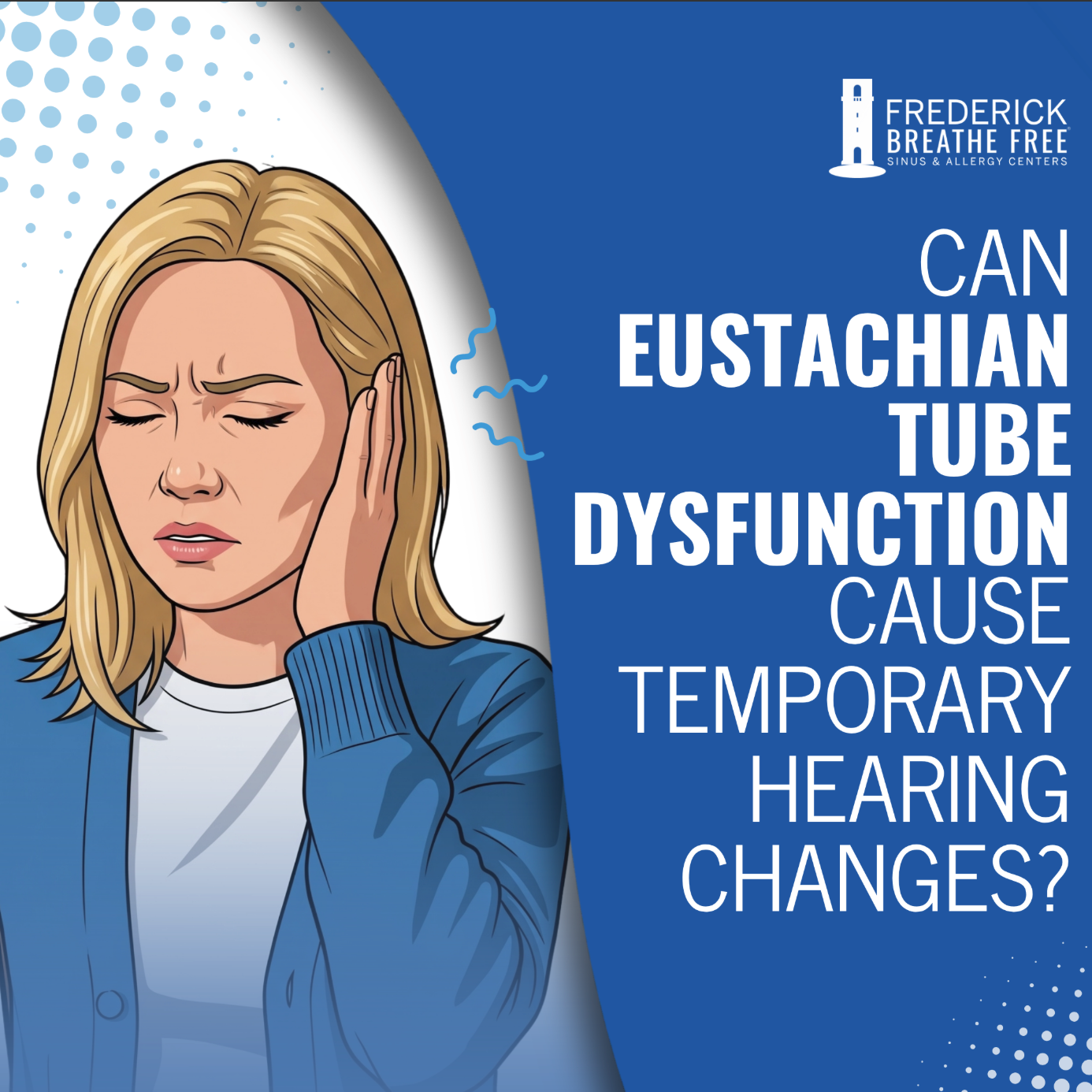
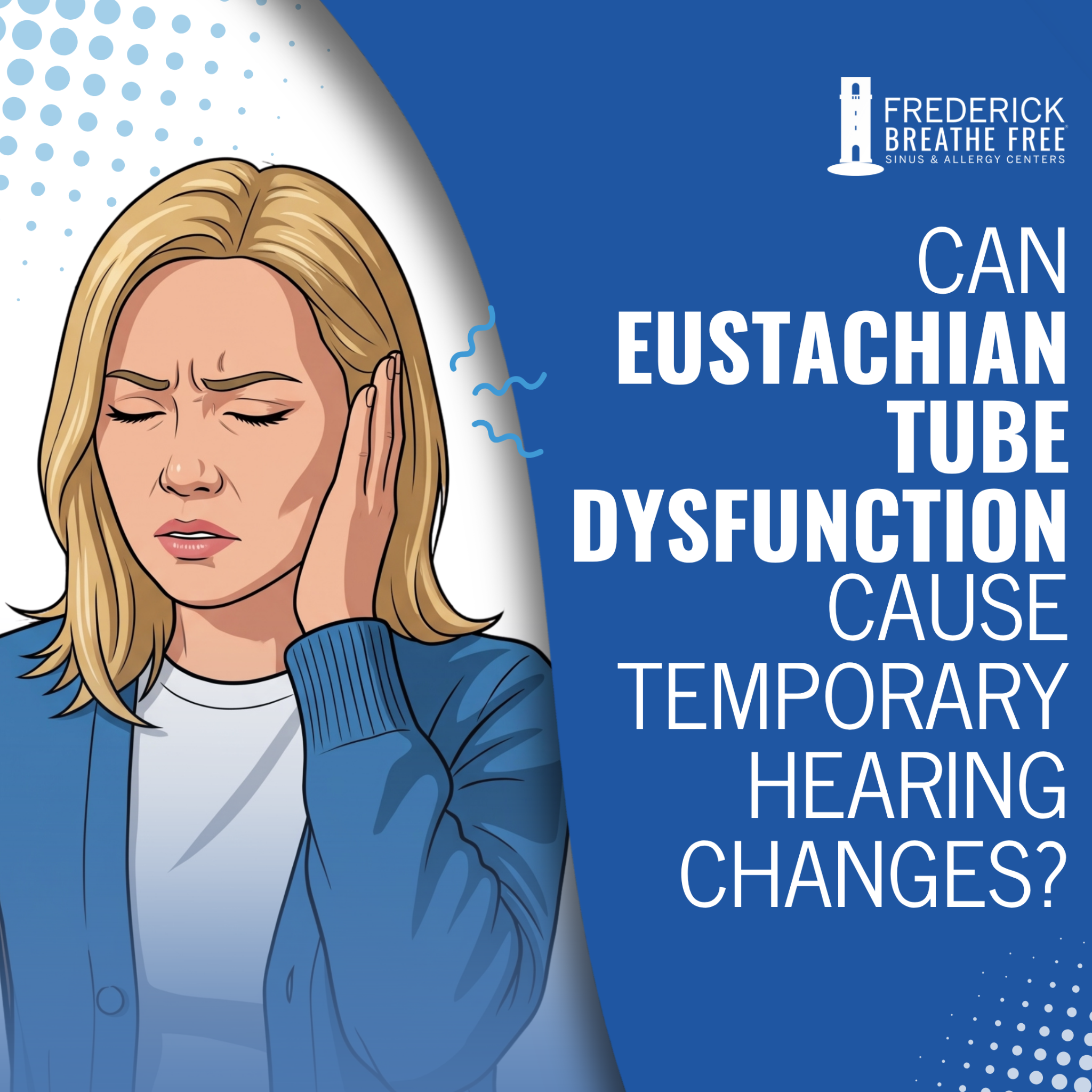
Can Eustachian Tube Dysfunction Cause Temporary Hearing Changes?
Your hearing suddenly sounds muffled, one ear feels clogged, and voices seem quieter than usual. A few minutes later, your ear pops and hearing improves—only for the muffled sensation to return again. Temporary hearing changes like these can be frustrating, especially when they come and go throughout the day.
Eustachian tube dysfunction (ETD) is one of the most common reasons this happens. At Frederick Breathe Free Sinus & Allergy Centers, patients throughout Frederick and surrounding Maryland communities are often evaluated for ear pressure, popping, and fluctuating hearing that turns out to be related to Eustachian tube function rather than permanent hearing loss.
How Do the Eustachian Tubes Affect Hearing?
The Eustachian tubes are narrow passages that connect the middle ear to the back of the nose and throat. Their job is to keep air pressure balanced on both sides of the eardrum and allow fluid to drain from the middle ear.
When these tubes open normally, the eardrum moves freely in response to sound. If they become swollen or blocked, pressure builds behind the eardrum. That pressure can change how sound is transmitted, making hearing seem muffled even though the inner ear is working normally.
This is why ETD often affects how sounds travel through the ear rather than causing permanent hearing damage.
What Do Temporary Hearing Changes Feel Like?
Hearing changes caused by ETD are usually intermittent rather than constant. Many people notice that hearing fluctuates throughout the day or changes after swallowing or yawning.
You may experience:
- Muffled hearing in one or both ears.
- A feeling that sounds are distant or underwater.
- Fullness or pressure inside the ear.
- Popping or clicking when swallowing.
- Hearing that briefly improves after the ear "clears."
These symptoms may last for minutes, hours, or several days depending on the underlying cause of the Eustachian tube dysfunction.
Why Does Hearing Improve After Your Ear Pops?
The popping sensation is often a sign that the Eustachian tube has briefly opened.
When the tube opens, pressure inside the middle ear equalizes. The eardrum can move more normally again, which may temporarily improve hearing. If swelling causes the tube to close again, pressure builds back up and the muffled sensation returns.
This pattern of hearing improving and worsening is a common clue that pressure changes—not permanent hearing loss—may be contributing to symptoms.
What Causes Eustachian Tube Dysfunction?
Several conditions can interfere with how the Eustachian tubes open and close.
Allergies
Allergic inflammation is one of the most common triggers. Swelling around the opening of the Eustachian tubes can prevent them from equalizing pressure normally.
Colds and Viral Infections
A cold can leave lingering inflammation even after congestion improves. Many people continue experiencing clogged ears after their other cold symptoms have resolved.
Chronic Sinus Inflammation
Ongoing inflammation inside the nose and sinuses can affect Eustachian tube function over time, leading to recurring ear pressure and hearing changes.
Changes in Air Pressure
Flying, driving through mountains, or scuba diving can temporarily overwhelm the Eustachian tubes as pressure changes rapidly.
In Frederick, seasonal pollen, mold, and other environmental allergens can also contribute to recurring inflammation around the Eustachian tubes.
Can ETD Affect One Ear More Than the Other?
Yes. Eustachian tube dysfunction can affect one ear or both ears.
Some patients consistently notice muffled hearing in one ear because swelling is greater on one side or one Eustachian tube is functioning differently than the other. One-sided symptoms are common, but they should still be evaluated if they persist or keep returning.
Does ETD Cause Permanent Hearing Loss?
In most cases, ETD causes temporary conductive hearing changes, not permanent hearing loss.
The hearing change happens because pressure or fluid behind the eardrum affects how sound travels through the middle ear. Once pressure returns to normal or inflammation improves, hearing often improves as well.
Sudden hearing loss, especially in one ear, requires immediate medical evaluation, even if the ear feels clogged or full. Do not assume sudden hearing loss is caused by Eustachian tube dysfunction. Persistent or recurring hearing changes should also be evaluated.
Can Fluid Behind the Eardrum Affect Hearing?
Yes. Poor drainage through the Eustachian tubes can allow fluid to collect behind the eardrum.
This fluid is not always infected. It may develop after a cold or because inflammation prevents normal drainage. Even a small amount of fluid can make hearing sound muffled and increase the sensation of fullness inside the ear.
An ENT examination can determine whether fluid is present and whether it is contributing to your symptoms.
How Does an ENT Diagnose ETD?
An ENT evaluation looks at both your ears and the nasal passages that affect Eustachian tube function.
Your provider may ask:
- When the hearing changes began.
- Whether symptoms affect one ear or both.
- Whether swallowing changes the pressure.
- If symptoms occur during allergies or after a cold.
The examination may include looking at the eardrum, checking for middle-ear fluid, evaluating the nose for inflammation, and recommending hearing testing if symptoms continue.
The goal is to determine whether pressure changes, fluid, or another ear condition is affecting your hearing.
How Is ETD Treated?
Treatment focuses on improving Eustachian tube function by addressing the underlying cause.
If allergies are contributing, allergy treatment may reduce inflammation around the Eustachian tubes. Prescription nasal sprays or saline rinses may also help reduce swelling inside the nose.
If chronic sinus inflammation is contributing to recurring ETD, treating the sinus condition may also improve ear symptoms.
The treatment plan depends on why the Eustachian tubes are not opening normally.
When Should You Schedule an Evaluation?
Temporary muffled hearing after a flight or during a cold often improves as pressure equalizes. Hearing changes that continue or repeatedly return deserve a closer look.
Schedule an evaluation if:
- Hearing feels muffled for several days.
- Ear fullness keeps returning.
- Your ears frequently pop without lasting relief.
- Symptoms occur with allergies or chronic congestion.
- You notice ringing, dizziness, or worsening hearing.
Recurring hearing changes often have an identifiable cause, and an evaluation can help determine whether ETD is responsible.
Temporary Hearing Changes Shouldn't Be Ignored
Hearing that comes and goes is not always a sign of permanent hearing loss. Eustachian tube dysfunction can temporarily affect how sound travels through the middle ear, creating muffled hearing, ear pressure, and popping sensations. Identifying whether ETD, allergies, or another ear condition is responsible is the first step toward appropriate treatment.
Book an online appointment with Frederick Breathe Free Sinus & Allergy Centers to find out whether Eustachian tube dysfunction is causing your temporary hearing changes and ear pressure.