Can a Deviated Septum Make Nasal Congestion Worse When You Lie Down?
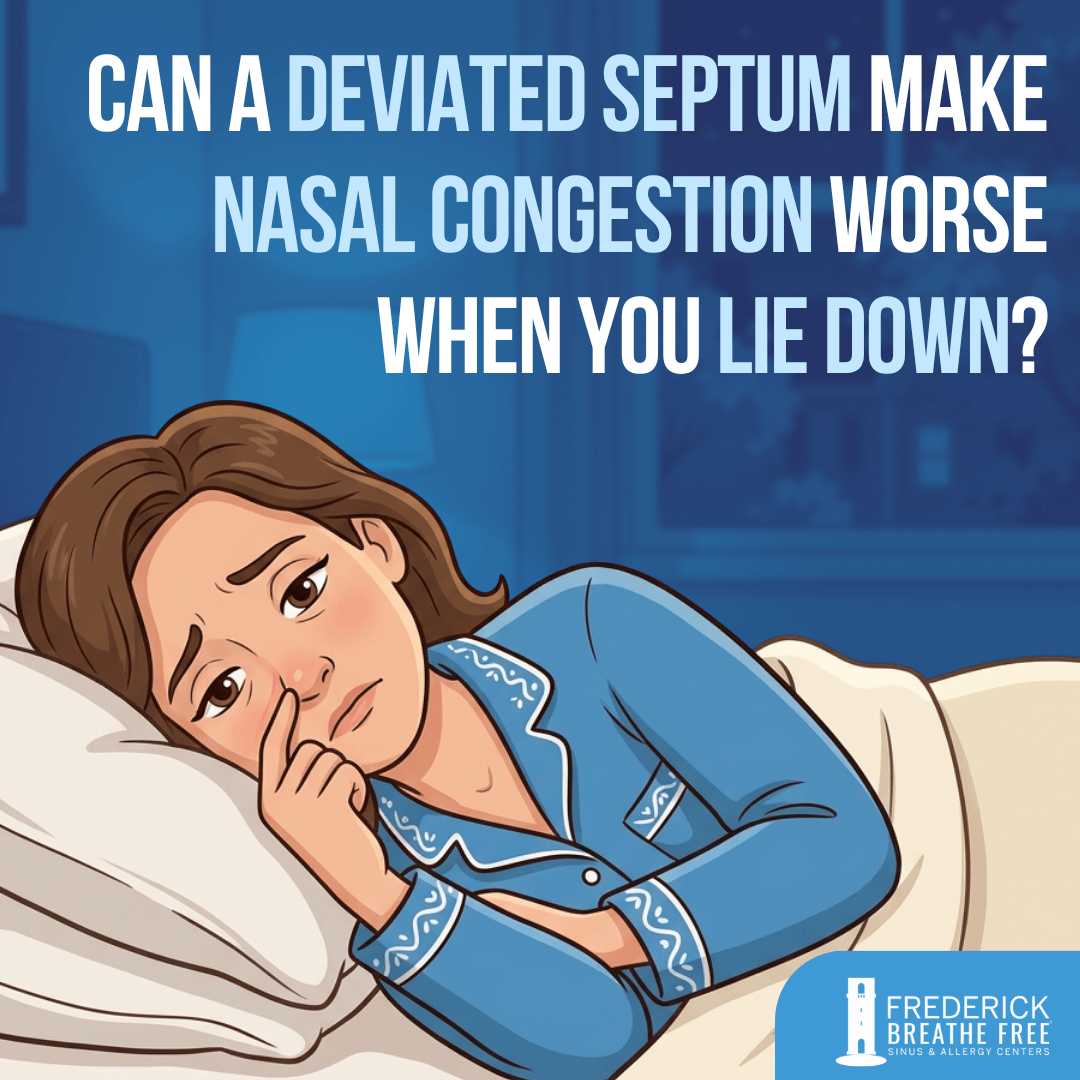
You may breathe reasonably well during the day but notice that your nose seems to close up as soon as you get into bed. One nostril may feel almost completely blocked, forcing you to breathe through your mouth or change sleeping positions just to get comfortable.
A deviated septum can contribute to this nighttime congestion. When the wall separating the two sides of the nose is off-center, one nasal passage may already have less room for airflow. Changes that naturally occur when you lie down can make that narrowing feel more noticeable.
At Frederick Breathe Free Sinus & Allergy Centers, an ENT can evaluate whether a deviated septum is contributing to nighttime nasal obstruction or whether allergies, inflammation, enlarged nasal tissue, or another condition may also be involved.
Why Does Your Nose Feel More Blocked When You Lie Down?
Nasal congestion can become more noticeable when you are lying flat. Blood flow and fluid distribution within the nasal tissues can change with body position, which may increase swelling inside the nasal passages.
Changes in body position can also affect how nasal drainage is perceived. Although the sinuses normally clear mucus through the movement of tiny hairlike structures called cilia, lying down may make mucus accumulation or postnasal drainage feel more noticeable.
Increased swelling of the nasal lining may further contribute to a blocked sensation, especially when the nasal passages are already narrowed.
For someone with a deviated septum, these changes can be more noticeable on the narrower side.
How Does a Deviated Septum Add to the Problem?
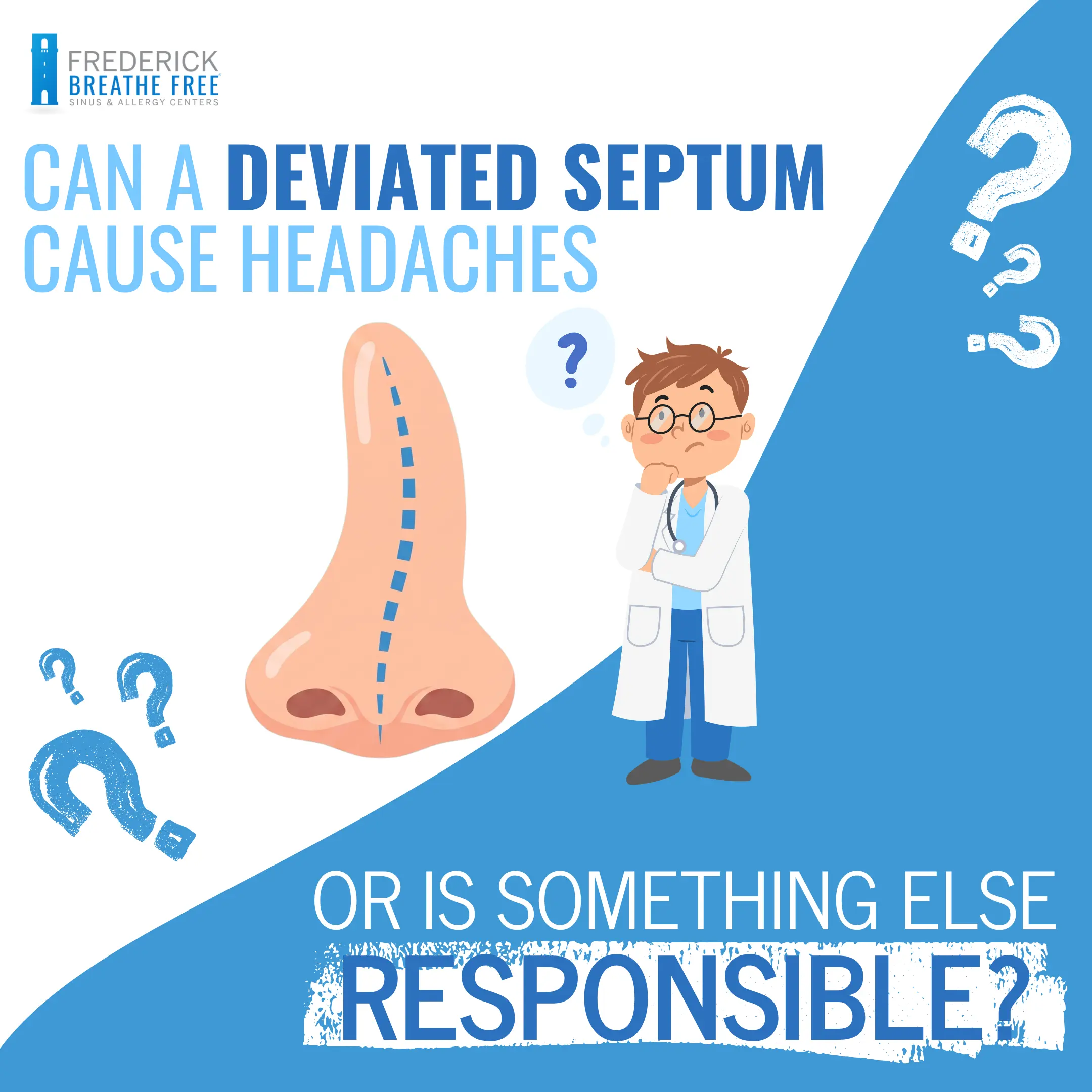
The nasal septum separates the right and left nasal passages. Ideally, it sits relatively close to the center. When it bends or shifts to one side, it can reduce the amount of space available for airflow through that nostril.
During the day, you may compensate without thinking about it. When congestion or tissue swelling develops, however, the available space becomes even smaller.
That combination can make one side feel significantly more obstructed at night than it does during the day.
A deviated septum does not necessarily cause symptoms on its own. Some people have a deviation without experiencing meaningful breathing problems.
The important question is whether the anatomy is contributing to the symptoms you are experiencing.
Why Does One Nostril Sometimes Feel Completely Blocked?
Your nose naturally goes through something called the nasal cycle.
Throughout the day, the tissues inside each nasal passage alternately become slightly more swollen and then less swollen.
Most people do not notice these changes. If one side is already narrowed by a deviated septum, however, the normal nasal cycle can make the difference between the two sides much more obvious.
You might therefore notice that one nostril feels blocked when you lie on your side, while the other feels easier to breathe through.
After changing positions or as the nasal cycle progresses, the sensation may change.
This does not necessarily mean the septum itself is moving. The underlying structure stays in place while the surrounding nasal tissues change.
Can Allergies Make Nighttime Congestion Worse?
Yes. Allergies can cause swelling of the nasal lining, which reduces the space available for airflow.
If one side is already narrowed because of a deviated septum, allergy-related swelling can make that side feel even more restricted.
Exposure to indoor allergens such as dust mites, pet dander, or mold may also become more noticeable at night, depending on your sleeping environment.
This is why treating only one possible cause may not completely resolve nighttime congestion.
An ENT can assess whether your symptoms are primarily related to nasal anatomy, inflammation, allergies, or a combination of factors.
Could a Deviated Septum Affect Your Sleep?
Difficulty breathing through your nose at night can make sleep less comfortable.
You may wake with a dry mouth because you have been breathing through your mouth, or you may notice that you snore more when your nasal passages are obstructed.
However, not every sleep-related breathing problem is caused by a deviated septum.
Loud or persistent snoring, gasping during sleep, witnessed pauses in breathing, or significant daytime sleepiness can be signs of a sleep-related breathing disorder and should be evaluated separately.
A deviated septum may contribute to nasal obstruction, but its presence alone does not establish a diagnosis of sleep apnea.
How Can an ENT Tell What Is Causing the Congestion?
An ENT will look at more than whether the septum is crooked.
During an evaluation, your provider may ask when the congestion occurs, whether one side is consistently worse, whether symptoms change with your position, and whether you have allergies or recurring sinus problems.
The nasal passages can then be examined for a deviated septum, swollen tissue, enlarged turbinates, nasal polyps, drainage, or other sources of obstruction.
Depending on your symptoms and examination findings, additional testing or imaging may also be recommended.
This helps distinguish a structural problem from congestion caused primarily by inflammation or other contributing factors.
What Can Help if a Deviated Septum Is Affecting Your Breathing?
Treatment depends on what is contributing to the obstruction.
If nasal swelling from allergies or inflammation is part of the problem, medications or allergy treatment may help reduce the swelling and improve airflow.
These measures can address inflammation but do not physically straighten a deviated septum.
When a significant septal deviation continues to interfere with nasal breathing, an ENT may discuss septoplasty.
This procedure is designed to straighten the nasal septum and may improve airflow in appropriately selected patients.
However, improvement varies, and septoplasty may not fully resolve nighttime congestion when allergies, enlarged turbinates, nasal valve problems, or other nasal conditions also contribute to symptoms.
Surgery is not necessary for every person with a deviated septum.
The decision depends on the severity of symptoms, examination findings, response to appropriate nonsurgical treatment, and how much the obstruction affects breathing, sleep, and daily life.
When Should You Get Nighttime Nasal Congestion Checked?
Occasional congestion at bedtime is common. Persistent difficulty breathing through your nose is different.
Consider an ENT evaluation if you:
- Regularly struggle to breathe through one or both nostrils at night
- Wake with a dry mouth
- Frequently sleep with your mouth open
- Experience snoring associated with nasal obstruction
- Continue to experience congestion despite treating allergies or other suspected causes
- Notice persistent or worsening blockage on one side of the nose
An evaluation can help determine whether a deviated septum is contributing to the problem and whether something else is making your nighttime symptoms worse.
If you also experience loud snoring, witnessed pauses in breathing, nighttime gasping, or significant daytime sleepiness, discuss these symptoms with your healthcare provider, as they may warrant a separate evaluation for a sleep-related breathing disorder.
Tired of Fighting for Clearer Breathing at Night?
Going to bed should not mean spending the night switching positions, breathing through your mouth, or trying to clear a blocked nostril.
A deviated septum can make nighttime congestion more noticeable, particularly when swelling or allergies further narrow an already restricted nasal passage.
However, the most appropriate treatment depends on identifying whether structural narrowing, inflammation, or a combination of factors is contributing to your symptoms.
Schedule an evaluation with Frederick Breathe Free Sinus & Allergy Centers to find out what may be making it harder to breathe through your nose at night and discuss treatment options appropriate for your individual needs.