Can a Deviated Septum Cause Headaches—or Is Something Else Responsible?
Imagine waking up with severe headaches that have started to affect your day-to-day activities, work, concentration, productivity, sleep, and comfort. You hop on Google and research potential causes, and you learn about deviated septums.
You start asking:
“Do I have a deviated septum?”
“Does a deviated septum cause headaches?”
“What are my treatment options?”
“Are there other contributing factors that cause my headaches?”
Here at Frederick Breathe Free, we help patients in Frederick, MD, understand their headaches better, determine if a deviated septum is a contributing factor, and explore appropriate treatment options.
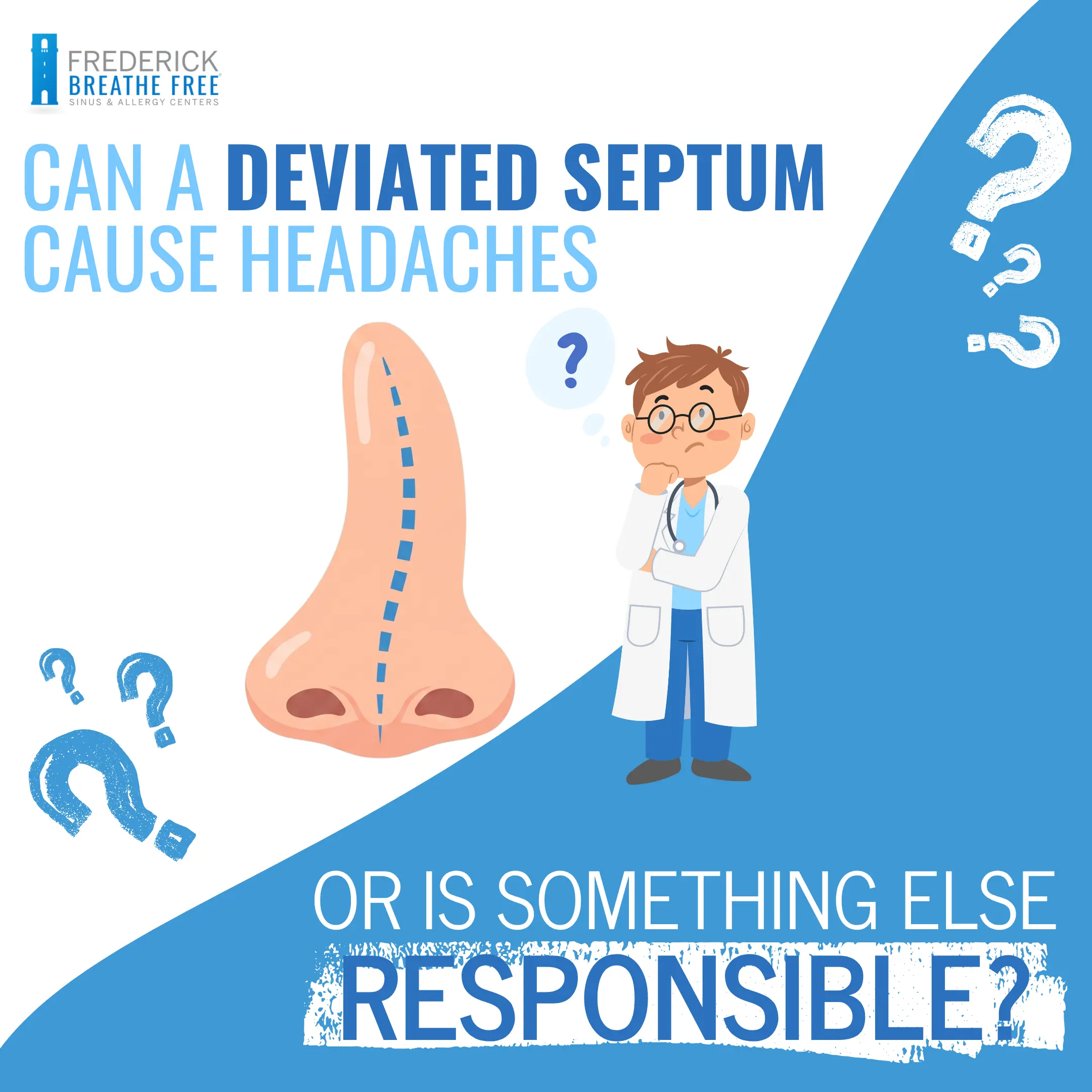
Understanding a Deviated Septum
What is a deviated septum?
A deviated septum is an anatomical variation in which the septum, which is a wall of bone and cartilage that separates the nasal cavity into left and right nostrils, is misaligned and off-center.
A deviated septum may be present at birth or result from an injury or trauma to the nose. Most people have a nasal septum that’s a little off-center, but not all cases cause symptoms, which is why lots of people don’t realize that they have it.
A more pronounced or severe deviation may make it harder for air to flow through the nose, making it difficult to breathe. A severe deviated septum may make one more susceptible to other sinus and nasal issues.
What are the common symptoms of a deviated septum?
Symptoms of a deviated septum vary from one patient to another. Common signs to be on the lookout for include:
- A nose that looks off-center, or nostrils that are uneven or different sizes
- Difficulty breathing out of your nostrils, which is usually worse on one side
- Nasal congestion
- Headaches
- Facial pain or pressure
- Loss of or reduced sense of smell
- Nosebleeds
- Snoring
- Noisy breathing
What causes a deviated septum?
Some people with a deviated septum may be born with it. A complicated delivery can cause injury to the nasal septum. As the child grows, the nose and nasal septum also grow and can sometimes lean more toward one side. This is a common deviated septum case.
Some people can develop a deviated septum due to an injury to the nose, such as a broken nose from accidents, falls, and sports.
Can a Deviated Septum Cause Headaches?
Yes, a deviated septum may contribute to headaches.
✅ In some patients with a deviated septum, areas of contact between the nasal septum and nearby nasal tissues have been associated with headaches.
✅In some cases, a deviated septum can increase the risk of sinusitis. The structural anomalies can cause a blockage in the nasal cavities. Common symptoms of sinusitis include facial pain or pressure and headaches.
✅ Moreover, some research has found an association between a deviated septum and migraine, although this does not necessarily mean that a deviated septum causes migraine. A migraine can cause throbbing or pulsing head pain, which may affect one or both sides of the head.
What Are My Treatment Options for Headaches Due to a Deviated Septum?
Mild cases of a deviated septum won’t typically need treatment because there are few to no symptoms. Treatment options will vary, depending on the severity of the condition. Treatment may include:
- Medications, such as decongestants, antihistamines, and nasal steroid sprays, may help address some mild symptoms.
- Septoplasty is a surgical option that is designed to modify, correct, or reshape the nasal septum. It may be the recommended treatment option when symptoms are severe, persistent, or unresponsive to standard medications or other forms of conservative treatment.
However, septoplasty will not cure headaches. Symptom improvement is not guaranteed, and results will vary depending on the underlying cause.
However, Not All Headaches Are Due to a Deviated Septum
However, not all headaches are due to a deviated septum. Headaches can result from a variety of other factors or conditions, such as:
- Stress: Stress can cause a steady, aching, and band-like pressure or tightness on both sides of the head, also known as a tension headache. Emotional stress, anxiety, lack of sleep, and dehydration can trigger this type of headache. Aside from headaches, it can also cause a tightness in the neck or shoulder muscles.
- Allergies: Allergies can cause allergen-induced inflammation in the sinuses. This blockage can trap mucus and cause pressure in the sinuses, and may cause a dull, aching pain in the face, particularly in the nose, cheeks, forehead, and behind the eyes.
- Nasal polyps: Nasal polyps are excess tissue growths that can affect the nasal structure and cause headaches or a heavy feeling of pressure in the forehead, cheekbones, and eyes. This occurs because the tissue growths can block normal sinus drainage, which traps mucus and triggers sinus inflammation.
When Should I Seek Medical Attention for Headaches?
Headaches can occur due to a variety of reasons, and conditions can overlap, which is why it’s important to seek medical attention if you are experiencing any of the following symptoms that may point to a more serious underlying condition:
- Difficulty breathing through the nose
- Frequent or recurring sinus infections
- Difficulty sleeping due to breathing difficulties
- Frequent nosebleeds
Conclusion: Understand Your Headaches With Frederick Breathe Free
If you are experiencing severe, persistent, or worsening headaches that you suspect may be more than just occasional headaches, or headaches that start affecting your daily activities and comfort, our team at Frederick Breathe Free can help assess your symptoms and determine if a deviated septum or some other underlying medical condition may be contributing.
We serve patients in Frederick, Urbana, Walkersville, Middletown, Brunswick, and the rest of Frederick County. Contact our team to learn more about your headaches and what we can do to help.