.png)
When Sinus Pressure Becomes a Sinus Infection
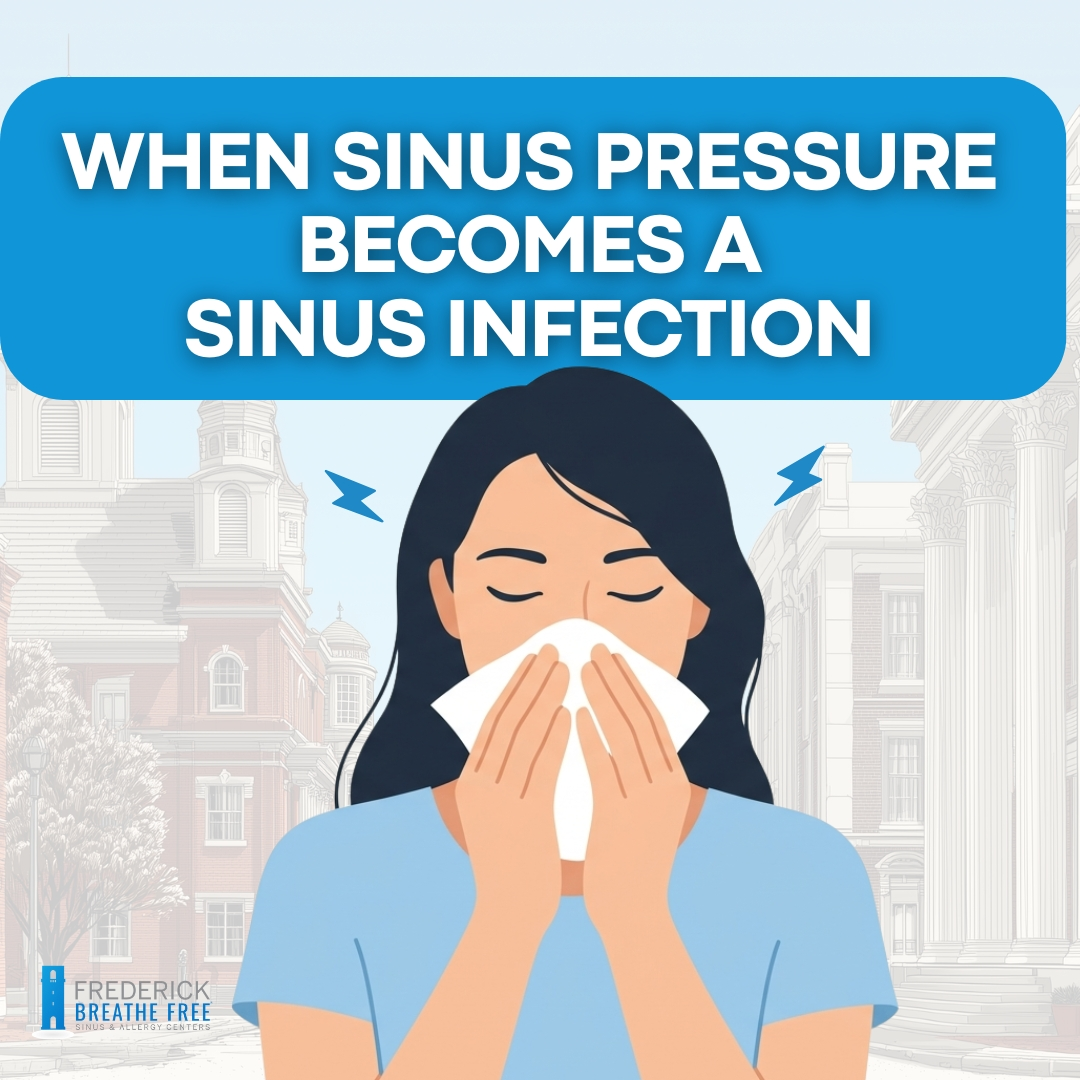
Imagine waking up one day with a feeling of tightness, pressure, or pain around your nose, eyes, cheeks, forehead, or even your jaw. The discomfort can feel persistent and may become more noticeable when you move your head or change positions.
What you might be dealing with is what is known as sinus pressure. It often results when the tissues lining the sinus and nasal passages become irritated and swollen. When the sinus linings become inflamed, it can trap mucus and prevent mucus flow and drainage. This may contribute to nasal congestion, breathing difficulties, and sinus pressure.
An ENT doctor in Frederick, MD, can evaluate your sinus symptoms and determine if the sinus pressure you’re feeling may be a case of a sinus infection.
What Is Sinus Pressure?
The sinuses are hollow, air-filled spaces behind the nose, cheeks, eyes, and forehead. Normally, the sinuses naturally produce mucus, which humidifies the air we breathe and also traps and removes potential irritants in the sinus passages.
Sometimes, however, the sinuses can become irritated and swollen, which then traps mucus, causing buildup, nasal congestion, breathing difficulties, and even sinus pressure.
Sinus pressure is a feeling of tightness, pressure, pain, or achiness in the face, particularly around the nose, cheeks, eyes, and forehead. In some cases, the pain can radiate to the surrounding areas, including the jaw, teeth, and even scalp.
Sinus pressure can potentially result from the irritation, swelling, and inflammation of the tissues lining the nasal and sinus passages. When these passages become swollen and inflamed, mucus can’t flow and drain efficiently, which may cause pressure or tightness in the sinus cavities and the surrounding areas.
What Causes Sinus Pressure?
Sinus pressure occurs when the tissues and membranes lining the sinuses and nose become irritated, swollen, and inflamed, due to a variety of factors, including:
- Allergies
- Sinusitis
- Viral infections (e.g., the common cold or flu)
- Bacterial infections
- Structural issues in the nose and sinuses (e.g., nasal polyps or a deviated septum)
- Changes in air pressure
When Does Sinus Pressure Become a Sinus Infection?
Sinus pressure can be troublesome–your head feels heavy, your face feels sore, you can’t breathe properly, and the pain and tightness feel much worse even with the slightest movement.
However, sinus pressure alone does not necessarily mean you have a sinus infection. While sinusitis is one possible cause, allergies, viral illnesses, and other conditions can produce similar symptoms.
Understanding the symptoms and causes of sinusitis can help you recognize when sinus pressure may be part of a larger sinus problem.
What Is Sinusitis?
Sinusitis is characterized by the irritation, swelling, and inflammation of the tissues lining the sinuses. Sometimes, the sinuses can become irritated and swollen, which then traps mucus, resulting in mucus buildup, nasal congestion, breathing difficulties, and sinus pressure.
What are the common symptoms of sinusitis?
Sinusitis symptoms vary significantly per patient, but common signs to look out for include:
- Nasal congestion
- Runny nose with thick nasal discharge, which may be clear, green, or yellow
- Postnasal drip, or mucus dripping down the back of the throat
- Facial or sinus pressure, particularly around the nose, eyes, cheeks, and forehead, which may worsen with head movements or bending over
- Cough
- Headaches
- Ear pain
- Toothache
- Halitosis, or chronic bad breath
What are the common causes of sinusitis?
Some of the common causes of sinusitis include allergens, viruses, bacteria, and fungi. Moreover, there are some risk factors that increase one’s susceptibility to sinus infections, including:
- Asthma
- Allergies
- Nasal polyps
- Deviated septum
- A weakened immune system
- Smoking
The Two Types of Sinusitis: Acute vs Chronic
There are two main types of sinusitis:
✅Acute Sinusitis
Acute sinusitis is a short-term swelling and inflammation of the sinuses. Symptoms usually last less than four weeks and may be resolved with adequate rest, proper hydration, home remedies, and over-the-counter medications.
✅Chronic Sinusitis
Chronic sinusitis is a long-term swelling and inflammation of the sinuses. Symptoms are usually persistent or recurrent and can last for 12 weeks or longer. Typically, this type of sinusitis may need a different treatment approach for effective management of symptoms.
Diagnosing Sinusitis
Your healthcare provider can evaluate your sinus issues and help determine whether your sinus pressure might be due to a sinus infection.
Sinusitis evaluation and diagnosis will involve your ENT doctor carefully assessing your symptoms, including their severity and your health history. They will perform a physician examination of your nose, ears, and throat to check for any swelling or inflammation that may be causing a blockage.
If you come in for sinus pressure, they may check for tenderness around the sinuses, nose, eyes, cheeks, and forehead.
In more complicated cases, where further testing and evaluation may be necessary, your doctor may recommend:
- Nasal endoscopy
- Allergy testing
- Imaging tests
- Nasal swabs
- Biopsy
Treatment Options for Sinusitis
Treatment options and management strategies will vary depending on the severity of your condition. A consultation with an ENT care provider can help guide you toward the appropriate courses of action, which may include:
- Over-the-counter medications, such as antihistamines, decongestants, saline nasal sprays, and pain relievers
- Allergy medications
- Immunotherapy
- Sinus rinses and neti pots
- Prescription antibiotics or intranasal steroid sprays
- Septoplasty
- Balloon sinuplasty
When Is It Time to See a Sinus Specialist in Frederick, MD?
Some sinus conditions may resolve on their own with adequate rest, proper hydration, home remedies, and over-the-counter medications. However, consider scheduling an appointment to see a sinus specialist in Frederick, MD, for worsening or persistent symptoms that last longer than 10 days.
Moreover, seek immediate medical help for severe symptoms, such as high fever, stiff neck, facial swelling, vision changes, and confusion.
Conclusion: Understanding Your Sinuses and When to Seek Help
Frederick Breathe Free provides sinus, allergy, and ENT care in Frederick, MD, and the nearby Maryland communities. Schedule an appointment with our team to find out if your sinus pressure is due to sinusitis or something else.