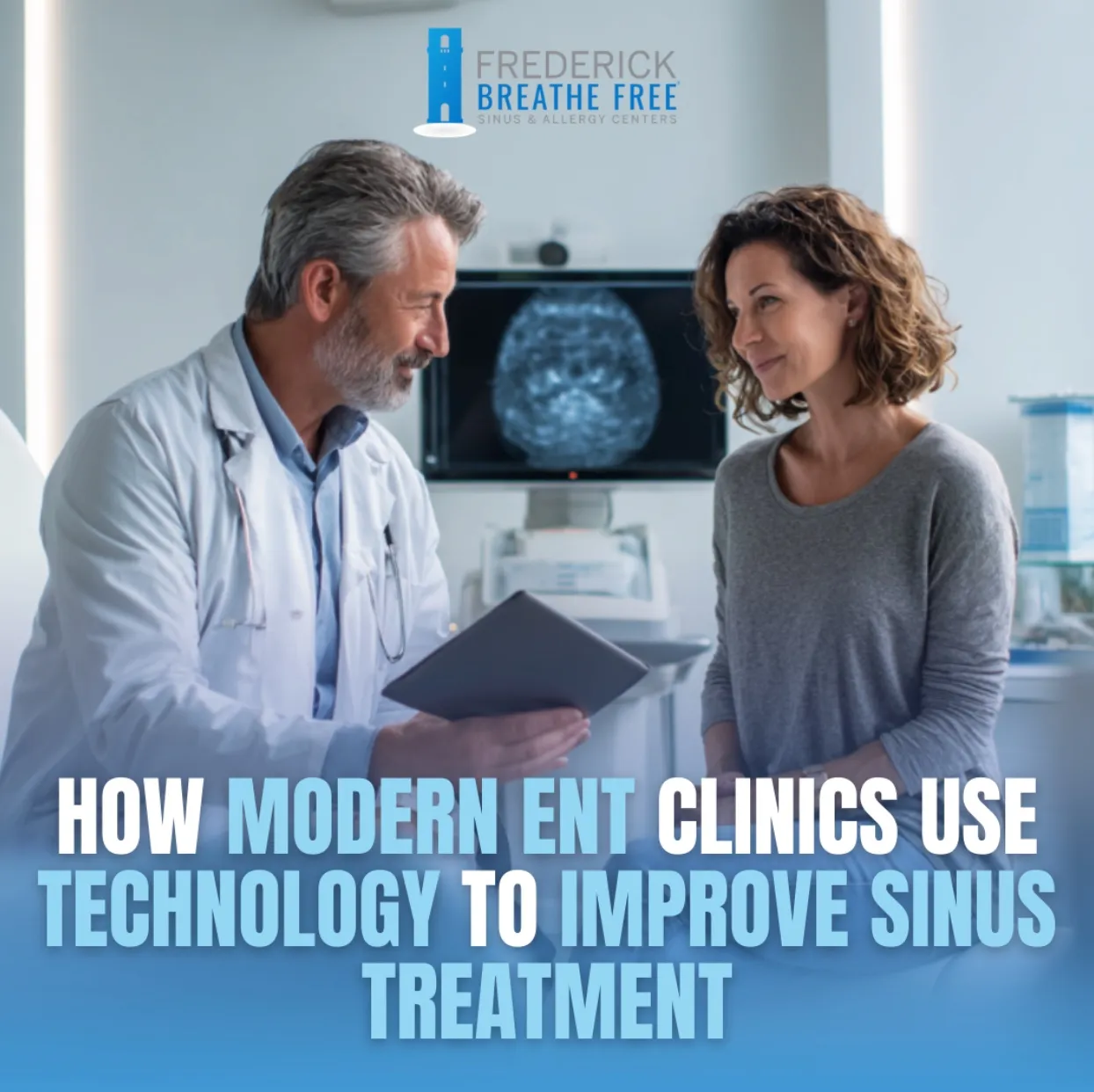
How Modern ENT Clinics Use Technology to Improve Sinus Care
If you have ever dealt with ongoing sinus pressure, congestion that will not clear, or headaches that seem to come back again and again, you are not alone. Sinus issues are common, and they can make everyday life feel harder than it should be. Breathing through your nose, getting good sleep, or focusing during the day can all become a challenge.
At Frederick Breathe Free, patients often ask how modern technology fits into sinus care. While technology does not provide instant answers or guaranteed results, it can help ENT doctors take a closer look at what may be happening inside the sinuses, when appropriate. Understanding how these tools are used can help you feel more informed and prepared if you are considering an ENT visit.
Why Sinus Problems Can Be Hard to Figure Out
The sinuses are small, air-filled spaces located behind your cheeks, forehead, and nose. Because they are hidden deep within the face, sinus issues are not always easy to assess with a basic exam alone.
Symptoms like pressure, congestion, or drainage can have many possible causes, including inflammation, structural differences, allergies, or infections. In many cases, more than one factor may be involved. This is where technology can help doctors gather more information, though it is important to remember that tests do not always lead to clear or simple answers.
Looking Inside the Nose With In-Office Exams
One of the most common tools used in ENT clinics is nasal endoscopy. This is a standard in-office procedure that allows the doctor to look inside the nasal passages using a thin tube with a light and camera.
A nasal endoscopy may help the doctor:
- See areas of swelling or irritation
- Observe mucus buildup or drainage
- Check the openings that lead to the sinuses
The exam is usually brief and done during a regular office visit. Not every patient needs this type of evaluation, and even when it is used, findings may not fully explain symptoms. Still, it can provide useful details that are not visible from the outside.
When Imaging May Be Part of the Conversation
In some situations, an ENT may recommend imaging, such as a CT scan of the sinuses. This type of scan creates detailed images of the sinus spaces and nearby structures.
Imaging may be discussed when:
- Symptoms continue despite initial care
- Structural concerns are suspected
- Further evaluation is needed before discussing procedures
It is important to know that CT scans are not used for every sinus problem. Many patients do not need imaging, and scan results do not always change the care plan. Imaging is one tool among many, not a solution on its own.
How Hearing and Breathing Tests Fit In
Because the ears, nose, and throat are connected, sinus issues can sometimes affect breathing patterns or ear symptoms. ENT clinics may use standard tests to better understand how these systems are working together.
These evaluations may include:
- Hearing tests
- Nasal airflow assessments
- Exams of the throat related to breathing
These tests help provide a broader picture of what may be contributing to symptoms, though results must always be reviewed alongside your medical history and physical exam.
Using Technology to Guide Next Steps
Technology does not replace the conversation between you and your doctor. Instead, it helps support discussion and decision-making.
Based on exam findings, your ENT may talk with you about:
- Monitoring symptoms over time
- Medical treatment options
- Environmental or lifestyle factors
- Whether additional evaluation is needed
Not every patient follows the same path, and responses to care can vary. The goal is to gather enough information to make thoughtful decisions, not to promise specific outcomes.
Minimally Invasive Options and What to Know
Some ENT clinics offer minimally invasive sinus procedures that use specialized tools. These options are not right for everyone and are only discussed when appropriate.
If procedures are mentioned, your doctor should explain:
- What the procedure involves
- Why it may or may not be recommended
- Possible risks and limitations
- That results vary and are not guaranteed
Any procedures discussed should be FDA-cleared or considered standard of care unless stated otherwise.
Why Follow-Up Still Matters
Even with modern tools, sinus care is often an ongoing process. Symptoms can change, improve, or return over time. Technology can help gather information at one point, but it does not replace follow-up visits or continued communication.
Follow-up care may include:
- Repeat exams
- Adjustments to care plans
- Coordination with other providers
This step-by-step approach helps ensure that care stays aligned with how symptoms evolve.
What Patients Should Keep in Mind
Technology has improved how ENT doctors evaluate sinus issues, but it is not a shortcut or a cure. Asking questions can help you better understand how these tools are being used.
You may want to ask:
- What information does this test provide?
- Is this test needed right now?
- What are its limits?
Clear answers help you stay informed and involved in your care.
A Thoughtful Approach to Sinus Evaluation
Modern ENT clinics use technology to better understand sinus anatomy and symptoms, but these tools work best when combined with careful exams and open discussion. Technology supports care—it does not replace clinical judgment or guarantee results.
At Frederick Breathe Free, technology is used to help guide evaluations and conversations, always with the understanding that every patient’s situation is different.
If ongoing sinus issues are affecting your daily routine, an ENT consultation can help you better understand what may be contributing to your symptoms. Frederick Breathe Free offers evaluations that combine clinical exams with standard diagnostic tools when appropriate. Scheduling a visit with us today!